Anagram synth block: Cognate Macro Synth vs Micro Synth
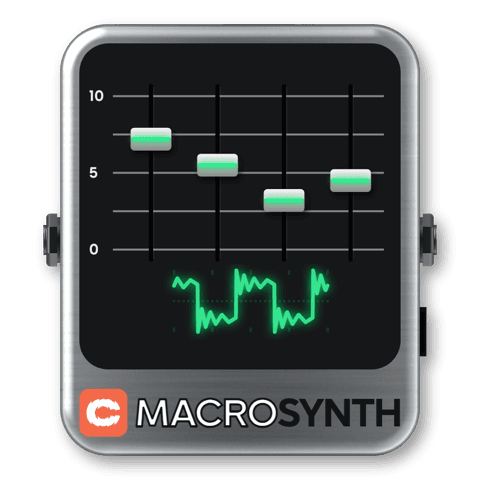
Cognate Macro Synth is a new Anagram block based on the Electro-Harmonix Bass Micro Synth, with 12 wave shapes, four filters and a dry blend for bass.
On this page
A new synth block landed on the Darkglass Anagram Marketplace at the end of October, and got its 1.1.0 update this week. Cognate Macro Synth is Cognate Audio's model of the Electro-Harmonix Bass Micro Synth. That is the 10-slider pedal that gave bass players a sub-octave, an octave-up and a swept filter in the early 1980s. The block costs €34.99 as of 6 November 2026, and it is the first on the Marketplace built around that pedal.
Real gear named in this post is identified as the developer describes it. Nothing here is endorsed by the original manufacturers. We are independent and sell nothing.
At a glance
| Cognate Macro Synth | |
|---|---|
| Developer | Cognate Audio |
| Based on | "A circuit-level homage to the classic Bass Micro Synth", in Cognate's words |
| Category | Modulation & Pitch, mono in and out |
| Price | €34.99, as of 6 November 2026 |
| Version | 1.1.0, dated 4 November 2026 |
| CPU | 2.1%, by Cognate's figure |
| Added by Cognate | 12 wave shapes, Ladder, MS-20-style and Vowel filters, a dry Blend |
What the Bass Micro Synth is
Electro-Harmonix released the guitar Micro Synthesizer in the late 1970s and the bass version in the early 1980s. Despite the name, it is not a keyboard synth with a pickup. It is an analogue pedal that takes the signal from your strings and builds four voices out of it.
The sub-octave divides the waveform to get a square wave an octave down. The octave-up voice rectifies the signal. A square-wave fuzz squares it off at pitch, and the fourth voice is your own bass.
All four voices go through one resonant low-pass filter, and that filter is where the sound comes from. Every time you play a note, an attack detector sweeps it from a start frequency to a stop frequency at a rate you set. That is the "wow" you hear on every Micro Synth recording.
There is no pitch detection anywhere in the box. That is why the pedal follows slides and bends instantly. It is also why it gets strange on chords and dead notes.
Bass players have used it since the early 1980s because it gives you synth bass without a keyboard. It is also rude in a way clean octavers never are. Its fiddly reputation comes from the same thing that makes it good. The sweep is triggered by your attack, so your technique is the envelope.
What Cognate modelled, and what it added
Cognate Audio says it modelled the block from the pedal's circuit. The sub-octave and octave-up voices, the square fuzz, the resonant filter and the attack detector all come from the Bass Micro Synth. Like the original, the block (plugin) has no pitch detector.
We like that Cognate is upfront about what this means. Its voices "lock straight to your strings", and the manual warns that the Sub voice can stumble on chords, fret noise or a weak signal. That is the pedal's behaviour, kept on purpose.
Then the block goes past the pedal. Where the original has one square fuzz, the block has 12 wave shapes on one knob. Two of them are the pedal's square fuzz, at pitch or an octave down.
The rest are saws, clean squares, pulse waves with moving width, and stacked patches. One is a detuned saw pair over a sub, which Cognate describes as the classic Minimoog bass. There is also Super Saw + Sub, four detuned saws over a sub-octave saw, for pads.
The filter has four types instead of one. Micro is the pedal's own circuit, and Ladder is a Moog-style ladder filter with a fatter low end. Ladder is the default.
Twenty is modelled on the Korg MS-20 filter. It is a high-pass into a driven low-pass, and it snarls when you push the resonance. Vowel is a formant filter where Start and Stop choose between eight vowels instead of frequencies.
For most bass players, the addition that matters is Blend. On the original, the Input slider sends your signal through the filter with everything else, so the pedal has no clean path. The block keeps that behaviour on the Input control and adds a separate Blend, from 0 to 100%, that mixes your untouched bass back in underneath. That keeps your real low end and attack under the synth even when the filter closes.
The controls, in pedal order
Cognate kept the pedal's layout, so if you know the sliders you know the block.
| Control | What it does | Default |
|---|---|---|
| Sub | Square voice one octave down | 7 |
| Input | Your bass, through the filter and gate | 2 |
| Oct | Octave-up voice, bright and ringing | 2 |
| Wave | Level of the chosen wave shape | 6 |
| Wave Shape | One of 12 voices | Square Fuzz (Micro) |
| Trigger | How easily a note restarts the sweep | 5 |
| Start | Where the sweep begins, 40 Hz to wide open | 8 |
| Stop | Where the sweep settles | 3.3 |
| Resonance | Peak at the cutoff | 6 |
| Type | Micro, Ladder, Twenty or Vowel | Ladder |
| Rate | Sweep speed, higher is slower | 1.6 |
| Attack | Fades the synth in on new notes | 0 |
| Blend | Dry bass mixed in, 0 to 100% | 100% |
| Level | Output, -40 to +12 dB | 0 dB |
| Gate | Threshold below which the synth goes quiet | 5 |
| Modulation | Movement for PWM and stacked-saw shapes | 5 |
Defaults are from Cognate's manual for version 1.1.0.
Two details are worth knowing before you play. Trigger responds to how fast your level rises, not how loud you play. A legato line can ride one long sweep, while a plucked note restarts it. Gate also does double duty, setting the silence that lets Attack swell again and how long the square shapes hold.
Three Macro Synth settings to start with
- The classic Micro sweep. Set Wave Shape to Square Fuzz (Micro) and Type to Micro. Start 8 to 9, Stop 2 to 3, Rate around 2, Resonance 5 to 7. This is Cognate's own recipe for the pedal sound.
- Synth bass that sits in a mix. Wave Shape Saw Pair + Sub, Type Ladder, Blend between 50 and 70%, as Cognate suggests, so your real attack stays under the synth. Keep Stop near 2 to 3 so notes hold open, which works like the sustain stage of an envelope.
- Talking bass. Type Vowel, Wave Shape Saw or Saw Sub, then play with Start, Stop and Rate. Each attack moves between two vowels.
In your chain, put it after a compressor and before any chorus or delay. Cognate suggests fuzz, overdrive or octave blocks on either side of it. It also suggests a phaser or plate reverb afterwards for a studio feel.
Cognate Macro Synth vs Axioma, Polymath and Kinetic
- Modulation & PitchBuilt in
 Darkglass · Built in
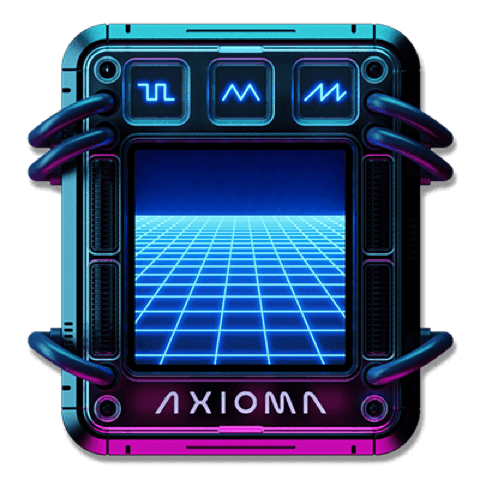
Axioma
Based onOriginal designOriginal design - Modulation & Pitch€34.99
 Cognate Audio
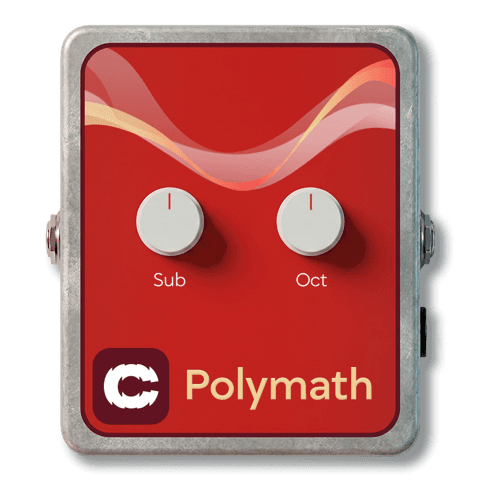
Cognate Polymath
Based onOriginal designOriginal design - EQs, Filters & Dynamics€34.99
 Cognate Audio
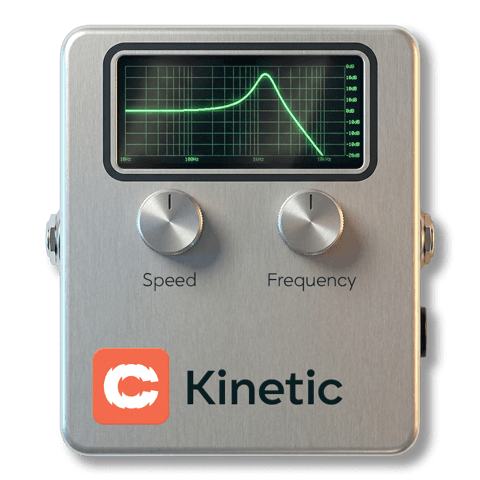
Cognate Kinetic
Based onOTA envelope filters of the Mu-Tron III lineage, plus a Minimoog ladder filter optionOur guess
The Anagram already ships with Axioma, Darkglass's own built-in synth. The Marketplace also has Cognate's Polymath pitch shifter and Kinetic envelope filter. Each one solves a different problem.
Axioma is Darkglass's own design, a monophonic synth with its own oscillators. Polymath is a four-voice pitch shifter rather than a synth. Kinetic is the filter half of the Micro Synth idea, with an auto-sensitivity that fixes the fiddliness instead of keeping it.
Macro Synth is the only one that behaves like the original pedal, glitches included. It is also the only one with that square fuzz and that attack-fired sweep. Maybe you have always wanted a Micro Synth on your board but never wanted to carry one. This is the first Anagram block that gives you the real circuit's manners.
Trial mode on the Marketplace runs for 35 seconds at a time. That is long enough to find out whether you enjoy being the envelope.
Real gear named in this post is identified as the developer describes it. Nothing here is endorsed by the original manufacturers. Prices and versions are as of 6 November 2026.